17/02/2013

Lincoln

When Oscar season is upon us, there's usually a good couple of movies released that you can guarantee will have a fairly good chance of sweeping the board, and quite a few of those films tend to have come from a certain Mr. Spielberg. So, without wanting to sound a little cynical, a drama about one of the greatest figures in American history, directed by Spielberg, starring one of the most critically acclaimed lead actors of our time...any shock that we're talking about a film that has been nominated for twelve Academy Awards? Yep, it's Lincoln.


The movie focuses on the final few months of President Lincoln's life, a period in which the President was attempting to push through the Thirteenth Amendment, ending slavery in the United States at a time where the country was still divided by civil war. The Amendment was widely unpopular with a great deal of the country at the time, and the film emphasises the moral struggle undertaken by the President in keeping faith in his cause, instead of using it as popularity leverage to bring an end to the war. The plot is supported by Lincoln and his wife Mary's rocky relationship with their eldest son; Ulysses S. Grant's maintaining of the frontline; and the work of Radical Republican Congressional leader Thaddeus Stevens in ensuring that emancipation would succeed. The plot is largely an accurate, if exaggerated account of the time, so it is left to Spielberg to fill out the colour of the story, which is nothing less than what you get.

In terms of performances, Daniel Day-Lewis is by far and away the most remarkable thing about this film, and that is in no way a disparaging remark about anything else you see. Day-Lewis is renowned for his method acting, often outright refusing to break character for extended periods of time in order to immerse himself in his roles, and you can certainly tell it's worth the effort from his performance as Abraham Lincoln. Everything about Day-Lewis expresses such an air of what we picture the President to have been like, from his soft, croaky and warm voice, to the slow, steady and crankety manner in which he moves, not to mention looking remarkably similar in appearance to him. The script allows Day-Lewis to deliver whimsical little anecdotes at every turn (with one character even getting annoyed that he's about to hear "another story"), causing us all to be taken in by the idea of a gentle giant of a man, filled to the brim with knowledge. Day-Lewis is simply outstanding, it's difficult to say which of the roles he has played have been his finest, but his turn as Lincoln must be considered a major contender. He is supported brilliantly too, with Sally Fields playing Mary Lincoln, troubled by an overwhelming grief for the loss of one of her sons, the character was often thought to be insane, but is shown here as holding a level of intellect adequate enough to hold her own with the political minds filling the White House. Fields is as dependable as you'd expect, and her anguish over whether her husband will allow their eldest to enlist provides a more human aspect to the almost supernatural figure of the President. A third stunning performance is turned in by Tommy Lee Jones, in the role of Stevens, the crotchety but rapier-witted Radical Republican Congressional leader, and devout abolitionist. The trademark Jones grimace is prominent throughout, however this time it is partnered with tremendous deliverance of an unpredictable man. We can never quite figure out what Stevens is about to do or say, but we always feel is if there is something bubbling underneath his stony expression. Stevens is a key player in the eventual passing of the Amendment, and as such, it is only fitting that he is played by a man who offers such a powerful performance. There are minor roles too for Joseph Gordon Levitt (seems you have to have a three-part name to be considered for most roles of this film), Hal Holbrook, James Spader and Jackie Earle Haley, beefing out the story nicely.

The film is shot beautifully, again, something you expect from a Spielberg picture, but the efforts of cinematographer Janusz Kaminski need a serious amount of praise. There is a reason Spielberg uses this man as his principal photographer, having kept his services through Schindler's List, Saving Private Ryan, Minority Report, War Horse and more, Kaminski is a vital part of making Spielberg's films look like Spielberg films, you feel totally immersed in the picture, it's very clean yet not unbelievable, there is simply the very feel of 19th century America about every single scene. 

The only negative criticism I have to offer the film is somewhat contradictory. Yes, the performance of Day-Lewis as Lincoln is phenomenal, however, as suggested earlier, he is presented as some sort of almost superhero-type figure; each speech that he gives is soaked in meaning and philosophy, running the risk of becoming less believable. I'm not questioning whether or not Lincoln was anywhere near the almost prophetic man presented in the film, but he simply doesn't seem to be of our world; an engineer even going so far as to ask whether he feels he "was born in the right time". The awe-inspiring manner in which Lincoln leaves the White House for the last time is also depicted as if the man was a spirit drifting through the time of those lucky enough to have lived with him - moving, but quite probably over-done slightly.

4/5 - An extremely impressive film, aided enormously by the stunning and mesmerising performance of Day-Lewis. Very enjoyable, and even gets you on tenterhooks, even though we all know the outcome of the voting process in the centre of whole story. A definite go-see, just try not to get a little annoyed as I did as the feel of being in the presence of Abraham Lincoln/Justice & Equality Man, the superhero of 19th Century America.

23/01/2013

Django Unchained

There are a few directors whose every movie is as eagerly awaited as the last, thanks to a reputation built on a back catalogue of top class offerings. Quentin Tarantino is certainly one of those, as in my opinion, he has yet to make a film anything less than very good. We expect something in particular from Tarantino in his film, more often than not a loving B-Movie flavour, often a very dark sense of humour, but always, always, a great deal of violence. Now, after years of waiting for it, Tarantino finally has his go at a Western, with Django Unchained.


Django is the tale of a slave, the eponymous Django, who is given his freedom by bounty hunter Dr. King Schultz, forming a partnership to take down a series of targets, before ultimately trying to rescue Django's wife from a plantation. The film takes an utterly brutal look at pre-civil war America, and most definitely focusses on the treatment of black slaves. The movie is nothing short of visceral in the handling of violence throughout, and a great deal of it - at least initially - involves the horrendous treatment of slaves, particularly in mandingo fighting. Definitely not one for the faint hearted, but of course, this is a Tarantino effort, so it's doused with a great deal of head-shaking humour to thoroughly confuse how you should be feeling about it.

The performances of the cast in Django are extremely impressive, although you might expect as much, with Tarantino's reputation. Jamie Foxx's hero grows from a quiet and naive slave to a ruthless bounty hunter, more than willing to get his hands dirty in the process, even assuming the character of a black slaver. Foxx is as he usually is, very focussed and solid, nothing whatsoever to really pick at him for. Leonardo DiCaprio, who Tarantino had sought after for years, plays Calvin Candie, the owner of the 'Candieland' plantation, a figurehead of a mandingo fighting ring, and owner of Django's wife Broomhilda, and he's pretty fantastic at it too. DiCaprio brings a swarthy, yet extremely slimy charm to the character, who is simultaneously sly and a little stupid, not to mention a genuinely unsettling burst of fury. As far as Tarantino villains go, Candie has pretty much everything we've come to expect; he's cool, stylish, has the odd couple of soon-to-be massively quoted lines, and he's very much not afraid to throw his weight around. Very enjoyable performance and quite probably my second favourite Tarantino villain, only second to a character played by the true start of the film: Christoph Waltz. In Inglourious Basterds Waltz was sheer perfection of a skin-crawling villain, loved and hated by all. This time, he's almost the opposite; Dr. Schultz is a kindly man, somewhat of a romantic and holds a great deal of moral obligations. However, he is also an incredibly successful bounty hunter, a profession which he keeps his emotions separate from. If DiCaprio brings charm to Candie, Waltz brings in by the boatload for Schultz, he is simply captivating in absolutely every single one of his scenes. In all seriousness, this is probably the dictionary definition of what a scene-stealing performance will say from now on, as no matter what is taking place in the scene, you cannot help but find yourself drawn to Schultz, just to see what he's going to do next. But there's also another impressive performance amongst them; that of Samuel L. Jackson as Stephen, an elderly house slave trusted by Candie. Although the make-up runs dangerously close to reminding us all of one of Eddie Murphy's Klump family members, Jackson is intimidating, funny and loathsome at all once.

The plot itself runs fairly smoothly, something Tarantino is bringing more and more into his films - just a straight, simple story. Not only is the main plot allowed to run freely, we're given a couple of genius little subplots to keep us fully enthralled, if a little caught unaware. The greatest example of these is Schultz and Django's run in with what we assume to be an early incarnation of the Ku Klux Klan, who are all too concerned with how their hoods are looking to go about their business. Added comedy comes from the unexpected appearance of Jonah Hill as a Klan member. The climactic end is tremendous, though you may have a sense of de ja vu, as it follows the same lines as both Kill Bill and Inglourious Basterds...and arguably Reservoir Dogs: a great big slice of revenge for the hero against a huge amount of people he doesn't like. There's even a great similarity between the speech Django gives at the point of his vengeance and the speech the Bride gives at the culmination of the Crazy 88 scenes, however, you can either view this as a lack of creativity, or that Tarantino is just incredibly good at reinventing a similar story, and have you enjoy it without realising it might very well be close in parts to what you've seen before.

Visually, again it's what you expect from a Tarantino effort, particularly following on from the style in which he shot Death Proof. There's a nice nostalgic feel to the film, and it definitely captures the twang of B-Movies that Mr Director is so very clearly a huge fan of. Furthermore, it's more of the same when it comes to the score; you're really thrown off kilter a little when rap and rock music comes blaring out over a backdrop of  19th century Southern U.S. But it works phenomenally; not only does it help set the perfect tone for the film, but it also reminds us just who has made it.

5/5 - Up there with my other favourite Tarantino films, and, in case you couldn't tell, I'm somewhat of a fan of his. Despite it's disturbing content, despite an enormous amount of splatter violence, and despite a lengthy runtime, Django Unchained flows very easily, and keeps you interested, if not engrossed for the whole ride. There are some brilliant performances from DiCaprio and Jackson in particular, and an otherworldly performance from Waltz to help it on it's way. However, most importantly, this is a film which not only retains all the hallmarks of a Tarantino film, but it is a brilliant film outright. A definite to watch.

07/01/2013

The Hobbit: An Unexpected Journey

After a wait which seemed maybe just a bit longer than the extended edition of the original Lord of the Rings extended trilogy, fans of Middle Earth cinema epics finally had got their wish, with a return to the Shire at Christmas time. Of course, we're talking about Peter Jackson's first of three-part adaptations of The Hobbit; An Unexpected Journey.


This film was lobbed back and fourth through development hell for the majority of the last decade, ever since the phenomenal success of the Lord of the Rings trilogy. Whilst Peter Jackson had initially expressed an interest in making the film as early as 1995, the rights to any adaptation were already under ownership, then, when these rights eventually were secured, the director attached to the project, Guillermo del Toro (Pan's Labyrinth, Hellboy) would ultimately drop out, leaving the whole thing in doubt until Jackson finally returned to the director seat. There is a great deal of pressure on this film, first and foremost, it has to live up to standard of the previous Middle Earth movies, which broke new ground, particularly for the fantasy genre. However, it is also vital that this film retains the more light-hearted feel of the Tolkien novel; after all, this was a story originally written for children.

Just in case you don't know, and if you don't, go buy the book, it'll make you just a little more smiley, here's a brief summary of the plot. Bilbo Baggins is your typical hobbit, happy to allow life to be something that just happens to him. All that changes completely upon the arrival of Gandalf the wizard to his home, bringing with him a company of thirteen dwarf warriors who are undertaking a quest to retake their home city from a terrible dragon, Smaug. This first part of the trilogy focuses more on how Gandalf and the dwarves slowly change Bilbo's outlook on a life of adventure, slowly making their way through the wilderness and through the Misty Mountains. There is an additional story fed into the main picture too, wherein Azog, an orc who killed the father of dwarf king Thorin Oakenshield before being humiliated in battle by the dwarf is tracking the company.

For me, the casting is one of the very best things about this movie, and that's aside from the obvious roles. Those being the return of Ian McKellen as Gandalf, Cate Blanchett as Galadriel and Hugo Weaving as Elrond. All as amazing as you'd expect it to be, particularly Gandalf getting up to a little more shenanigans than we were used to seeing last time round. An extra return to Middle Earth is also a little bit awe inspiring; Christopher Lee as Saruman. Sure, he gets CGI'd a little, thanks to Old Man Time trying in vain to erode Sir Lee from existence (he won't succeed), but Saruman is back in his full booming glory, and even though we know he's not supposed to be evil yet, Lee pushes through a suspiciousness about the great wizard in a bit of an "uh-oh, he's up to something!" kind of way. But, the best of all the returns has to be, and unsurprisingly so, Andy Serkis as Gollum. Gollum's big scene in this movie will no doubt go down as one of the best he's ever been in, which is saying quite a bit given the excellence of Two Towers and Return of the King, but it's almost as if Serkis was never not Gollum, he's somehow even creepier in his childlike brutality that you just can't help get fully sucked in to his riddles.As for those joining the cast, the dwarves all do their job masterfully, even if seemingly half of them get no speaking parts. Richard Armitage plays Thorin in a very Sean Bean-like manner: all blood, guts, moodiness and thunder, not to mention making several ladyfolk swoon in the process. James Nesbitt is not only a surprise inclusion in the cast as Bofur, but, perhaps a little more surprisingly, he's actually pretty good too, providing a mixture of humour and a bond to Bilbo. And that of course brings us to Mr Baggins, cast perfectly with Martin Freeman. Bilbo is essentially Arthur Dent from Hitchhiker's Guide To The Galaxy but with big hairy feet, so why not cast the man who made Arthur Dent brilliant to make Bilbo brilliant? Freeman brings a pleasant simpleness to the role, a reluctant giddiness to give in to his unexpected urge for adventure; there's a constant charm about him, and he's instantly likeable. Oh, and there are also pleasing little cameos from Ian Holm as old Bilbo and Elijah Wood (who almost certainly didn't need CGI on his face, as I'm fairly sure he's an ageless freak of nature), set literally seconds before the beginning of Fellowship of the Ring. Which is all very nice.

The story itself is good, pushing on through the meeting in the Shire to eventually battling goblins in the Misty Mountains, definitely no complaints with that. Nor with the inclusion of the extra story; Azog hunting down Thorin. The only complaint that I would have is that it seems to be extremely stretched. It's not a particularly popular opinion, but Fellowship was my least favourite of the LOTR films, largely due to how much time they spend in the Shire, and that's the danger run by this movie; it takes the majority of the first hour before they so much as leave Bag End. That said, the scenes with the dwarves are very much enjoyable, especially their drinking songs, their tidying songs, their sad songs...and their songs about songs. Furthermore, as muchas I truly enjoyed seeing so many of the familiar faces of the previous films, there is a feeling of "OOOH LOOK, IT'S HIM/HER! I REMEMBER THEM!". Case in point being Bret McKenzie (out of off of Flight of the Conchords) reprising his minuscule role as Lindir, for the sake of a barely less minuscule role this time out. The main problem the movie really had to deal with, as mentioned earlier, is the balance of a more light-hearted feeling that the previous films whilst still keeping everyone interested with a vaguely serious fantasy film, and it does wobble a little every so often. We get a little confused between the moody brooding of Thorin, the joyous singing of the dwarves, the full blown evil of Azog and the sheer slapstick of the Trolls, not to mention the flip-flop of moods present in all of the scenes involving the Goblin King (voiced fantastically by Barry Humphries, no less). It's a bit weird, because each of those scenes are extremely well done, and all are very much enjoyable, but they jar a little.

Cinematically speaking, the film is absolutely outstanding. The staple of Jackson's previous trilogy returns with a vengeance here; of course, it's the "SWEET MERCIFUL JESUS, NEW ZEALAND IS BEAUTIFUL" panoramic shots of the Kiwi countryside. But not only this, Jackson's decision to film in 48fps is a masterstroke in the main run, as it really makes you feel like you're looking through a window to Middle Earth, particularly when viewed in 3D or IMAX. However, one gripe with this is that some of the CGI looks a little tacky in comparison to the non-virtual surroundings; the Goblin King and the Trolls are the main culprits here, whilst looking impressive, they look very much like they've just been plucked from an animated film. Furthermore, Azog is pretty much an entirely animated presence in the film, and whilst that's not a bad thing if you get it right (which they definitely did with the Gollum motion capture), you sort of miss the giant brutes of men in orc costumes, only tweaked with CGI instead. However, some of the CGI is pretty spectacular, and the battle between stone giants is simply astounding.

Overall, it's a bit of a mish-mash in terms of tone, but I'll be amazed if you come away from it without actually having very much enjoyed the film. Encouragingly, it did feel quite similar to Fellowship, in terms of building up to a greater story, and so here's hoping that the next two will be a bigger step up, as although I definitely wasn't disappointed with the film, it didn't quite live up to what I had expected.

4/5 - A little confused in places, but definitely better than most fantasy films you're likely to see. There are scenes of sheer brilliance littered throughout, and it's almost worth sitting through all 169 minutes just for the scenes with Gollum, let alone anything else. Not quite as good as what I was expecting, but a very good film nonetheless.

P.S. - Everyone enjoy Sylvester McCoy being Sylvester McCoy being Radagast the Brown, completely insane, but this time...with rabbits!

14/11/2012

Argo


Sometimes film throws something unexpected at you. They can be things like Jim Carrey being an excellent serious actor (Eternal Sunshine Of The Spotless Mind), Sylvester Stallone making a very good modern Rocky film (Rocky Balboa), or anybody actually paying to see a Kevin James movie (literally any Kevin James movie). But on this occasion, we see the release of a film which was highly expected to crown the restoration of the reputation of Ben Affleck; it's Argo.


When we first really got a glimpse of Ben Affleck, we saw a man of great promise, with pleasing contributions (be it in front or behind the camera) in Good Will Hunting and the Kevin Smith films Mallrats, Chasing Amy and Dogma, and we all thought we had something good coming along. Unfortunately, however, roles in movies like Armageddon, Pearl Harbour, Daredevil and Gigli pretty much caused a blitz on his reputation (and pretty fairly so, if we're being honest about most of those films). But then we saw a glimmer of hope in him once more when Gone Baby Gone and The Town arrived; the key difference of course, being that Affleck was also directing, and what do you know it, he's done the same again this time. Seems the more creative influence the man has, the better his films tend to be: therefore we can either assume he just got lazy and has terrible taste in roles, or he simply got sick of terrible roles and wrote stuff for himself. Either way, it worked out great for us.

Argo is a movie 'inspired by' (meaning a lot of it actually happened, but some parts have most likely been sexified) by the 1979 Iranian hostage crisis. A short summary...because it's kinda also the plot...goes as follows: Iranian protesters raid the U.S. embassy in Tehran in response to the disgraced Shah being granted hospitality in America, where he spent months being treated in hospitals. Over 50 embassy employees (as well as people who happened to be there at the time) where taken hostage, whilst 6 Americans escaped and took shelter in secret at the Canadian embassy. Tony Mendez (Affleck), a CIA man whose speciality was to get endangered Americans out of hostile situations abroad becomes part of the think-tank to rescue the six in hiding. Mendez comes up with the idea of flying to Tehran, posing as a Canadian film maker, rendezvousing with the escapees where he would train the Americans on their back stories; the rest of the film crew. So they have to make a fake movie look realistic so that the Iranians will believe it enough to allow the 'Canadian's to leave on a plane back home.

Now, this is an almost entirely true story, so you'd expect that to spoil the plot slightly...I mean, if you know anything about the event, you know how it ends. However, this couldn't really be further from the truth, as the right application of (and by which I mean a metric juggernaut load of) tension sucks you into the unfolding drama as it goes on, causing you to forget what actually happens, and instead think of what you'd do in that situation...and duly squeal like the baby fish falling off his rocking horse at the start of Finding Nemo.

The performances are all very solid. Particularly key to the success of this film are the roles of the six hostages; these needed to be interesting enough to warrant us actually caring about them, whilst staying realistic enough for us to accept that this actually happened. And that, is short, is exactly what you get. Tate Donovan, Clea DuVall and Scoot McNairy are certainly the most eye-catching of the bunch, and each fulfil a required role in their group; leadership, fear and doubt respectively, which helps the film chug along nicely. Affleck himself is both prominent and understated at the same time; he's given a lot of screen time, but, true to his CIA character, you never really get an in-depth look at what's going on behind the job, although little hints are dropped in with regards to his wife and son, this is, thankfully, just an aside to the main plot. And then you have some truly joyous performances from three of the finest character actors around. First is Bryan Cranston (Malcolm In The Middle and, most spectacularly, Breaking Bad), who plays Jack O'Donnell, a chief at the CIA, but also a friend of Mendez. Second is John Goodman (Big Lebowski, Raising Arizona, The Artist...), as John Chambers, an Oscar-winning make-up artist used as a connection to Hollywood by Mendez. Finally, and my personal favourite, is Alan Arkin (Catch-22, Glengarry Glen Ross, Little Miss Sunshine and at least 17 bazillion others) as Lester Siegel, a Hollywood producer roped in by Chambers to help Mendez create the perfect fake movie. Again, without these three, the film wouldn't work, Cranston provides a stable professional/friendship grounding for Mendez, whilst the others not only have key roles in what needs to be accomplished in the success of the rescue mission, but also bring a dose of comedy relief done in the best possible taste.

This film will win awards, and hopefully not just because it happens to be based on a real-life act of insane heroism, but because it is genuinely very, very good. Despite there not being too much fast-paced action, or constant gags, the film really pulls you in, and that is simply because it doesn't do those things. It'll be one of those films that makes you feel all dandy for watching, understanding and enjoying it, because it's simultaneously simple yet smart; probably because what exactly happened is freakishly clever whilst also being totally stupid, as well as the film itself being produced in a straight-to-the-point manner.

5/5 - If you like to get submerged in the moment of real-life drama, you'll love it. You forget you're watching something that actually happened, which makes it all the more impressive when you remember that it's actually a film. Not only because of the daring of the real-life heroes, but also because you'll have just seen Ben Affleck produce something rare: a 'based on a true story' movie that isn't wallowing in pretence.

08/11/2012

Stitches

Once every so often something so completely absurd and brilliant comes shambling out of cinemaland that it simply has to be seen to make it seem real. Whether that's Nicolas Cage appearing as flamed-headed superhero, or Ben Affleck turning out to be a really good director, some things are just so weird to imagine as a sensible idea that we just can't help but watch. Note: I'm definitely not saying that Ghost Rider was a good thing, not even a little bit. On this occasion, however, something so utterly stupid just happens to become a perfect recipe for cult fantastitude that you'll probably think I'm making it up. Ladies and gents, I present to you... Stitches.


A quick sum up of what this insane film is comprised of: it cost a meagre 600 000 Euros, is both a tribute and send-up of 80s slasher flicks, the main character/antagonist is a sleazy children's entertainer who comes back from the dead in his clown form to take his revenge...and he's played by Geordie comedian Ross Noble. If done in the wrong manner, this film sounds like it could be absolutely terrible, but, if done right, it could be fantastic.

So, as hinted, the plot goes... Richard 'Stitches' Grindle is a terrible clown who works birthday parties, and one party in particular sees him having to cope with a group of especially evil children. The kids end up accidentally causing the death of the clown, tripping him head first onto a kitchen knife in the dish washer. Jump to a few years down the line, and all the kids are now teenagers, and Tom, the birthday boy on that day, still troubled by the memory of it. He hosts a house party on the weekend of his birthday, which inadvertently reunites the original gathering. Stitches returns from his grave to get his revenge at the party, and clowny brilliance ensues.

It's simple, straightforward slasher stuff in terms of story, when you think about it. Traumatic event > Years later > 'Unexpected' return > Bloody havoc. However, this is about a clown. A clown who takes his revenge  in ways which are specifically appropriate to those who wronged him in life. And the whole film is done with a blatant sense of humour...it knows it's a clown, it knows it's lead is a stand-up comedian, and it knows just how stupid it is. As such, there aren't any scares to speak of, because that's not the point. There is, however, a loving bucketload of 80s style gore. We're talking a victim getting there head inflated with a balloon pump gore here, and quite a lot of it done without the use of CGI. Basically read that as: done the way horror films were done when they were fun. You'll definitely squirm at some of it, but a lot of the time you won't know if you want to wriggle uncomfortably at the thought, or wet yourself at how that gore was unleashed. This is not gore for gore sake: see the Hostel films for that sort of malarkey. This is gore done for hilarity...plus...it's a ruddy CLOWN bringing it forward.

In terms of performances, the whole supporting cast brings exactly what is expected of them. They're a group of typical film teenagers: the clown, the fat one, the artsy girl, the bully, the slutty girl, the weird boy, the uncool main boy with issues. These are token stereotypes of the slasher film, and are used simply to fill the role. But these characters have a little more flesh on the bones, and are actually quite funny to watch, or, more importantly, enjoyable to watch be set upon by a rampaging undead clown (definitely a sentence which should be said more frequently). But of course, the undoubted star of the whole thing is Ross Noble, whose performance is only funnier if you've seen his stand up, because you know you've seen elements of his insanity before. Everything from the daft gruff voice, to the clown-like ways he moves, every little thing Noble does is comedy gold. Clowns are naturally really, really, ridiculously super creepy, so Noble bringing his natural daftness turns it around a little into the ludicrous, but in a very good way. Arguably my favourite scene of the lot coming in the form of the high speed...bicycle chase, wherein a knife-wielding Stitches pursues two would-be victims on a tiny tricycle; pure absurdity, but performed in a way that makes it hilarious.

There's very much a feel of The League of Gentlemen and Psychoville to this film, and that is definitely a good thing. The humour is cheesey, but in a totally right way...not to mention a little sick. It gets just about everything right. The only complaint I would possibly have is that it's arguably a little too short and makes you wish you had a bit more fun...so I guess that's sort of a good thing too. Mind you, it really is a solid and brilliant tribute to the slasher, right down to the standard formula of those who have debauchery-related fun times are the first to get it. But of course...this is with an intentionally stupid clown as the main piece.

4/5 - Now I'm not saying it's Oscar-worthy, or that it's the same quality overall as a critic's darling sort of movie, but for what it is, this film is amazing. It's a low budget horror/comedy, which is a genre with standards set by Shaun of the Dead. Whilst this is certainly not at that level, it is extremely entertaining, and, most importantly, very funny. It features some of the best death scenes you're ever likely to see, and they're all done in great humour. Do yourself a favour, see it if you get the chance, it's certain to become a strong cult classic.

31/10/2012

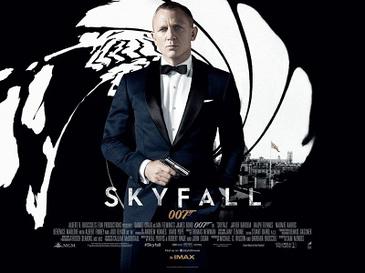
Skyfall

The name's... Let's not do that, we all know everybody's thought about saying it anyhow. Like you really need an introduction to this one: it's one of the expected biggest grossing films of the year, one of the greatest movie franchises of all time, the 23rd of the lot, time for a look at James Bonds latest mission in the Sam Mendes directed Skyfall.


The reboot of the Bond series has had to up the game in terms of gritty realism which seems to be the mood of preference of cinema goers at the minute, and it's certainly given it a very good go. Casino Royale was an absolutely fantastic film, almost certainly one of the best of the lot, but, whilst I'm not say it was terrible effort, it was a bit forgettable, having lost too much of the charm we expected of Mr. Bond in search of that realism. So really, the challenge set for Skyfall was to bring back some of the Bondian staples of old, somehow, whilst managing the fully keep grip on a realistic, modern background. Tough one.

Here's your tradition round up of the plot without giving away anything you'd be annoyed about...bit. Bond and MI6 in general seem to be heading towards the past, seen more as relics of the cold war than anything necessary and relevant for modern national security. This is due to the loss of a hard drive containing the identities of an enormous amount of agents working globally, falling into the hands of a mysterious and very much elusive terrorist. Bond needs to rebuild himself in order to track down and put an end to the work of his new unknown enemy. All the while, M is being forced into retirement, and MI6 is being overseen by Chairman Mallory during the transition period, as it is her leadership which is particularly being blamed for the state of the British Intelligence agency.

Put fairly simply; this is a very straight-forward story for a Bond film, and the key theme really is resurrection. Bond needs to prove that he is still relevant, and that it key both in the plot and in terms of the audience. But that is one of the many strengths of this film. You're with Bond all the way on this one, because you sort of feel the same way: no matter how much you liked or disliked the previous films, you have to ask how relevant he still is, gone are the days of Soviet and Communist spies, so who exactly does he have to face up against? The answer: it could be anyone, even those who were once like him. We don't know where our enemies are going to come from any more, we can't take any real guesses, and that is exactly why Bond is needed, for who else is better to cope with the unexpected than the man with the licence to kill? Exactly.

This is the film where Daniel Craig truly becomes James Bond. When the unbridled brute force seen in the previous two outings fails him, Bond is forced to become smarter, he has to choose every move with much greater care than he had done, with injuries and psychological scars taking their toll on him. Because of this, we get what ends up as a pleasing cocktail of Connery and Brosnan style Bonds; the embodiment of masculinity mixed with the wry wit we love from our favourite agent. Craig delivers the thankfully limited Bond clichés in a straight-to-the-point manner, instead getting his laughs from quick one-liners; the way it should be. Make no mistake about it, by the time you've watched Craig's performance, you'll be left considering in what order you place your favourite Bonds from now on. When it comes to support, Judi Dench gives you exactly what you knew you were going to get, but with added poignancy, as M seems to be heading for the exit. There's a welcomed return to action for Q as well, with Ben Whishaw providing a performance that is both more believable than John Cleese (sacrilege, for I do love the king of the silly walk) yet mixing in a bit of pure Matt Smith-style Doctor Who geek to the role. Naomie Harris is the first of two Bond girls in this one, and whilst I'll not say who she is (for those who don't already know), she sets up a very pleasing backstory for a character we'll end up loving all over again. Ralph Fiennes (not the second of the Bond girls, thankfully), goes totally against type in that he's not a homicidal killing machine in this film, instead he plays Mallory, the mysterious man overseeing MI6 during M's retirment, and he keeps us guessing as to what his motives are throughout, with traditional Fiennes bluntness throughout. Finally we have our villain, Raoul Silva/Tiago Rodriguez, who is played phenomenally portrayed by Javier Bardem. Silva is a villain the likes of which Bond has rarely experienced. First and foremost, he is an ex-agent, and a very good one at that, and Bardem shows off an extremely creepy mirror-image of Bond, almost how Bond could have been, had he gotten sick of his employers. Futhermore, Silva is a character who is at best sexually ambiguous, and one fantastically written scene shows off just how much of a foreign identity this is to the Bond audience, as Silva pretty much forces himself on 007, but only enough to make him squirm. Now I'm certainly not saying that being gay makes him evil, I'm not from the 17th century, but the fact that he is so opposite to what Bond is, whilst being so similar in many other ways makes him stand out as a villain, as he can hold his own in a fight, without having to rely on henchmen. Genuinely outstanding performance from Bardem.

But most important of all, the gadgets, these are what will really test how Bond is placed in our need for realism. Well, when Q hands over the new equipment for the mission, he says what "they don't really go for that" anymore, and he is of course referencing the famous exploding pen, how encouraging is that for the reboot? The gadgets are limited simply to a gun and a radio, which is also light-heartedly referenced in the film, as "sometimes the old ways are the best" crops up a couple of times, and he's right. To top it all off, the Bond car makes a comeback, that's right, the Aston Martin DB5 comes back for more. I'm not even a man who knows his cars but I got excited. People actually cheered, that's just how important that car is. And it's old, and that's the point, we want old mixed with the new for Bond, and that's just what we're getting.

5/5 - The more I think about how much I enjoyed this film, the more I realise it's because it has absolutely everything you really want from a Bond film. 007 is firmly lodged in the modern way now, but he has all the key elements of the classic films locked up in an updated fashion. For me, Connery set the standard, Brosnan came close, but the Craig era could be set to reach some very exciting heights. Definitely go see it.

17/10/2012

Looper

It's become somewhat of a film cliché recently to proclaim that science fiction is dead, and while I would agree that the genre has taken a bit of a beating with a series of unsuccessful, limp offerings (see Lost In Space, the Star Wars prequels, Signs, and the last two Terminator sequels, etc.), those that have actually been worth watching have really been worth watching. Just look at The Matrix, District 9, the Avengers films, Sunshine, Minority Report...the list (much like my heart - sorry) goes on and on. Thankfully, this year saw the release of a sci-fi movie which also fit that bill; Rian Johnson's Looper.


First of all, the key issue of this film: it's about time travel, which as most of you may know, gets a little bit wibbly-wobbly on the best of occasions. So that's the main problem this one has to conquer, which is lucky, as director Johnson declared that his biggest challenge "figuring out how to not spend the whole movie explaining the rules and figure out how to put it out there in a way that made sense on some intuitive level for the audience; then get past it and deal with the real meat of the story." So basically, just accept that time travel happens in it, and it's going to get complicated, but that's not really point of the whole thing; it's a story which just revolves around time travel, not a time travel story... With me?

The basic concept is this: the year is 2044, a crime lord has been sent back in time from 2074 (where said time travel has been invented, obviously) and set up a network of assassins known as 'loopers'. These loopers are paid to wait in specific locations for targets to be sent back to their time and eliminate them, thus creating a perfect crime for the gangs of the future. However, at some point the loopers will be given a golden paycheck, meaning they will have to kill their future selves, thus closing the loop 30 years down the line. Joseph Gordon-Levitt plays Joe, a looper saving up for a future abroad, having been pulled up through a childhood of hell and supposedly rescued by crime lord Abe, played by Jeff Daniels. Joe is faced with a dilemma when one of his targets turns out to be himself (played by Bruce Willis), but is immediately outsmarted by future-Joe, who goes on the run. Joe needs to find future-Joe before Abe's gang take down both, whilst future-Joe tries to track down one of three children who would grow up to be the man sentencing all loopers to their fate. Got it? Good, because it's a fairly simple story in the middle of a complicated background, but it's very well written, and certainly never lets the ARGH MY BRAIN HURTS of time travel get in the way.

In terms of casting, we all know exactly what to expect these days when we see Joseph Gordon-Levitt in a film: it'll be really, really, ridiculously cool. And this is no different, as he essentially plays a blend of his Inception and Dark Knight Rises characters - relaxed and cool whilst extremely well trained and dangerous, with that touch of charm which makes indie-girls go all wobbly. Even more pleasing and impressive, however, is his imitation of Bruce Willis; throughout, Gordon-Levitt maintains an accent eerily close to Willis, and, more impressively, his facial expressions are nailed on John McClane, and whilst I am fully aware of the use of prosthetics and CGI in aiding this, below it all is the foundation level, and that's all Levitt Gordon-Joseph. Then you look at Willis, who turns in a performance we've come accustomed to; he's cooler than cool (possibly even ice cold), hard hitting and just has that edge about him that only Willis seems to bring (see Sin City for the best example). You're always left a little surprised by Willis when you see him taking on a more emotionally rich role, and even though his character packs a huge amount of action, his performance is a deeper, more personal one, and it's very much captivating. Wonder when we'll stop being surprised by Mr Bruce, because he definitely deserves a little more acclaim for his efforts. Emily Blunt fills the boots of the main female presence of the movie, Sara, the farm-running single mother of troubled child Cid. Her character is a little more predictable than Joe, and does run a little close to the hard on the outside-damsel in distress on the inside stereotype, but that's definitely not Blunt's fault, and her performance is just as pleasing as any, arguably saving the role from cheesiness. Good support comes in the form of Daniels as Abe, as a gentle faced, harsh ruling mobster, and Paul Dano as Kid Blue, a detestable yet comic relief young gang member, determined to oust Joe as the favourite of his boss.

In terms of CGI usage, you'd expect there to be a great deal of it, after all, this is a science fiction film. And indeed there is, just to add that tastey futurey goodness to the movie, but it's never really obtrusive. The most impressive is arguably the aforementioned wizardry regarding Gordon-Levitt's face being morphed to look like Bruce Willis, and although you can tell it looks slightly odd, you could be easily forgiven for not realising it was altered. The most impressive scene regarding effects, for me, is one involving another looper's future self escaping, only to be slowly transformed by what the gang are doing to his present self in order to stop him. I'm not going to spoil anything for you, but it's mind-bending, disgusting and fantastic all in one.

All in all, this is an extremely pleasing film, with a meaty story for us to sink our almost certainly slightly confused teeth into. Plus, there's a good deal of action which is needed meet the quota of a good sci-fi film, without ever being too stupid. It's the sort of film you can (and I certainly did) discuss at great detail and pleasure, because there's a lot of ins and outs you can interpret for yourself from the one of the many head scratchers posed by Johnson; but again without going too far.

4/5 - I very much enjoyed this film, and found myself thinking "what is actually wrong with it?". It's a pleasingly original piece with good plot, cast, performances and the lot all round. The only criticism that I can offer which really hold it back is that it is guilty of being a bit slow in places, and you might find yourself zoning out because of it, however, it recovers very well from these slips and provides you with a film you'll want to talk about. Go see!